MALTA TENANT SUPPORT
  • Home
  • About
  • Rental Contracts
  • A chronology
  • Blog

Understanding the Arms bill (2)

15/4/2018

0 Comments

 
The rationale behind the Arms billing system

The principle is that if you consume more, you pay at a higher price per unit.  This is commendable policy.  However, is it fair that a one-person household has the same daily allowances at each band as a household of 5, say?

As illustrated in Understanding the Arms bill (1), the daily allowances at each band are as follows:
 
For every kWh of the first 5.4794 kWh per day @ €0 .1047
For every kWh of the next 10.9589 kWh per day @ €0.1298
For every kWh of the next 10.9589 kWh per day @ €0.1607
For every kWh of the next 27.3973 kWh per day @ €0.3420
.........................................remaining kWh per day @ €0.6076
 
This means that every household needs to consume 27.3972 units per day before hitting Band 4 (€0.3420 c per day).  EVERY household. 

So a household of 1 has the same allowance of 27.3972 units per day - before hitting the high band of €0.3420 per unit - as does a household of 5. 

Now I know that a household of 5 doesn’t have five times the electricity requirement as does a household of 1.  After all, most households – large and small – have one fridge, one washing machine etc.  But still it will be obvious to most that a larger household will consume more electricity –  more heaters, more fans, more washing loads, more cooking…

Does the annual eco reduction superimposed on this stepped billing system make a difference for larger households?  Does it make it fairer for larger households? Let’s look at this more closely. 

How does the eco reduction work?  In any one year, a reduction of 25% per person will apply on the first 1,000 units and a further 15% per person will apply on the remaining 750 units consumed. 

So, converting this to a daily ceiling, there is a 25% reduction on the cost of the first 2.74 units per person per day (1000 units divided by 365 days) and a further 15% reduction on the next 2.05 units per person per day (750 units divided by 365 days).  If this daily consumption of 4.79 units per person per day is exceeded, then there is no eco reduction.
__________________________________________________________________________________________
To summarize:
How the eco reduction is calculated:
  • There is a 25% reduction on the cost of the daily consumption of the first 2.74 units per person.
  • There is a 15% reduction on the cost of the daily consumption of the next 2.05 units per person.
  • If this daily consumption of 4.79 units per person is exceeded, then there is no eco reduction.
__________________________________________________________________________________________
 Illustration
Let’s illustrate this for a household of 5.  To be eligible for an eco-reduction, this household has to therefore consume less than 23.95 units per day (4.79 units per person multiplied by 5 persons).  If this household exceeds this 23.95 units per day, then they get no eco reduction.
__________________________________________________________________________________________

In my opinion, the annual eco reduction superimposed on a stepped cost per unit billing system is not working.  It is meaningless to have these two initiatives acting in tandem.  On the one hand, if you consume less than 27.3972 units per day (any size of household), you will not hit the very expensive €0.3420 band per unit.  On the other, a household of 5 will also get a (small) eco reduction if it does not exceed 23.95 units per day (or 4.79 units per person per day). 
 
The cost per unit jumps from €0.1607 at Band 3 to €0.342 at Band 4.  Larger households will be more likely to cross from Band 3 to Band 4.  This is a more significant factor than any compensation of an eco reduction in periods of lower consumption. 

The table below shows the detail of the Arms billing of our household's annual electrical consumption.  I looked at only the cost of our electricity consumption.  I did not look at the service charge.  We are a household of 5.  As you can see from the table below, the daily cost per day is exactly the same pre eco reduction as it is post  eco reduction.  The eco reduction is clearly not compensating.   ​
       
In my opinion, the Arms billing system needs to be completely overhauled.  Currently, it is incoherent and indecipherable.  For a household to range from paying @ €1.20 per day to €8.00 per day (see table above), depending on the period of consumption, is unjust.    Most people do not understand how this billing system works.  Heck, I have spent days deciphering it.  It shouldn't be rocket science.  A household  should not have to pay  €456.08  over a period of 57 days for its electricity consumption  because it dares occasionally use two electric heaters over the cold period.  It was far cheaper to run a centrally heated house in the depths of a Scottish winter.    This billing system is  clearly not fit for purpose.  
0 Comments

Understanding the Arms bill (1)

14/4/2018

1 Comment

 
 How Arms calculates the cost of electricity:

From the Electricity Supply Regulations, these are the annual allowances at each band on the Residential Tariff:
​
i) For every kWh of the first 2,000 kWh ..................... €0.1047; 
ii) For every kWh of the next 4,000 kWh ................... €0.1298;
iii) For every kWh of the next 4,000 kWh ................... €0.1607; 
iv) For every kWh of the next 10,000 kWh ................. €0.3420; 
v) For every kWh of the remaining consumption ....... €0.6076.
 
Arms converts the above ANNUAL allowances at each band to DAILY allowances. 
 
For example, at Band 1, the 2000 kWh annual allowance is divided by 365 days.  This gives the consumer a daily allowance of 5.4794 kWh at €0.1047.  Below are the DAILY allowances of kWh (units) at each band: 
 
For every kWh of the first 5.4794 kWh per day @ €0 .1047
For every kWh of the next 10.9589 kWh per day @ €0.1298
For every kWh of the next 10.9589 kWh per day @ €0.1607
For every kWh of the next 27.3973 kWh per day @ €0.3420
.........................................remaining kWh per day @ €0.6076

​To confirm that this is how Arms calculates the cost of the electricity,  I used the pro rata band allowances above to see whether it would  tally with our latest Arms bill.  This was for a period of 57 days. 
​
​So 5.4794 units per day x 57 days = 312.33 units @ €0 .1047
10.9589 units per day x 57 days = 624.658 units @ €0.1298
10.9589 units per day x 57 days = 624.658 units @ €0.1607
…………………………....……….remaining 707.356 units @ €0.3420


​​As you can see from the second page of our latest Arms bill, my calculation (see left) tallies: 
 

      312.329 units @ €0.1047 = 32.70
      624.657 units @ €0.1298 = 81.08
      624.658 units @ €0.1607 = 100.38
      707.356 units @ €0.3420 = 241.92
     
​Total:          2269 units €466.23 


Our 2269 units of electricity therefore cost 20.55 c per unit of electricity on average – practically double the cost per unit at Band 1 (10.47 c).

This calculation also taught me something new about the Arms billing system.  Effectively larger households obviously get through the cheaper bands more quickly than smaller households.

However, larger households get larger allowances for the eco reduction.  Next on the agenda, I will be looking at whether the larger eco reductions for the larger households compensate for the higher cost per unit (on average), when compared to smaller households.    I will also be illustrating how  being billed every two months is  costing us money.

In the meantime, folks, I would urge all of you to become experts on how the bills are calculated.  This billing system must be the most non-transparent, most unwieldy, most unnecessarily complicated billing system in the universe.  We need to understand how our bills are calculated. 

All I know is that it was cheaper to centrally heat a three-bedroom house in the depths of a Scottish winter than it is to have two electric heaters (occasionally used), two water heaters (occasionally used) and an electric oven.  We don’t have a dryer or a.c. 

A cost of €466.23 for 57 days is excessive, in my book.
1 Comment

Moving away from the law of the jungle

6/4/2018

0 Comments

 
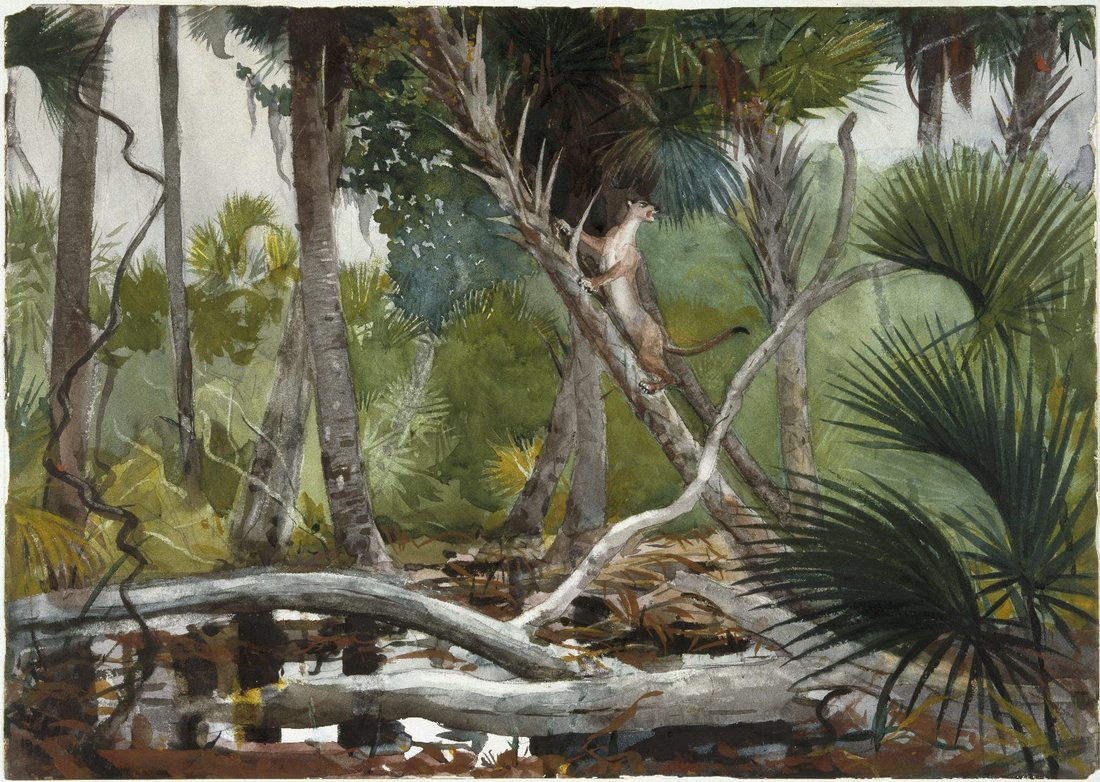
PictureWinslow Homer via Wikimedia Commons


In the jungle that is the Maltese rental market, it is immediately obvious that Malta’s landlords and letting agents are as far away as is possible from being described as professional.  Yes, there is a possibility that you may come across good landlords and good letting agents but this is totally a matter of luck.

Malta Tenant Support has been trying to support tenants for more than 3 years now.  Our main aim is to change the big picture, to inform a change in policy.  Our philosophy is that we do not only want to support tenants who happen to come our way.  Absolutely not.  We want all tenants to be able to live in their rental properties without enduring the trials and tribulations many currently endure.  We contend that being happy in your rental property should not be a matter of luck, and therefore we would like to see a regulated Maltese rental market, with all stakeholders knowing their rights and responsibilities in a regulated system that is fair both to the landlord and the tenant.

Our group has developed organically and includes lawyers, social justice warriors, economists, social workers, journalists, tenants, some landlords and some letting agents, amongst others.  We have had considerable success and, together with other entities, have ensured that renting is at the top of the political agenda.  The negative experiences endured by many of the tenants who come to the group have come in useful and have served as a basis to inform the current debate on the state of the Maltese housing market.

 The day that there will no longer be a need for a group such as Malta Tenant Support will be a magnificent day because this will mean that our work is done.

So, yes, most of our work is looking at the whole picture and providing a safe space for all in trouble to discuss their issues and receive support.  However, there are instances where we cannot help but get involved at a deeper level. 

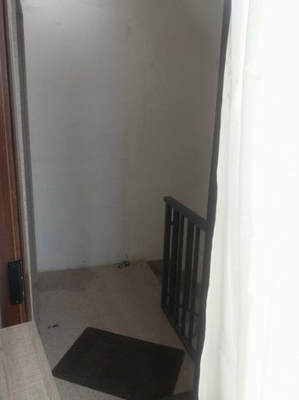
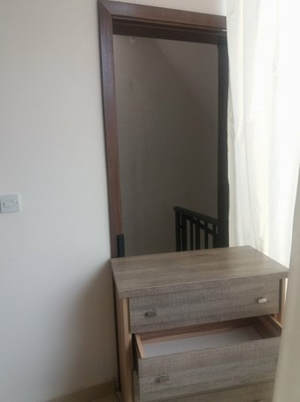
A few weeks ago, in the cold days of February, a tenant contacted us to tell us that her landlord had removed the front door off its hinges and also cut off their electricity supply.  This was a family of 3 -the child just 2 years old - plus a dog. 

Picture
Front door removed
Picture
Chest of drawers acting as barrier to stop escape of child and dog
I discussed this with my friend Dr Kurt Xerri who immediately suggested that we visit the police station.  Both of us could see that this particular landlord had gone well over the line of acceptable behaviour.  This case involved two trips to the police station and repeated chances given to the landlord to see reason.  Unfortunately, the landlord refused to see reason and a ‘kwerela’ - a criminal complaint - was therefore issued against him.  The landlord was having a hard time understanding that he was not justified in behaving the way he did.

Please note that when the tenant went to the police station to report her landlord for removing the door off its hinges and interrupting the electricity supply, the policeman she spoke to told her that the landlord was perfectly within his rights to do this because ‘it was his door’ and his electricity supply. 

You see, we have noticed that many in Malta do not understand that when a property is let to a tenant, use of the property has been given to the tenant over the rental contractual period.  Over the length of this period, the tenant has certain rights and the landlord has the responsibility to respect those rights.
 
Clearly it is not only landlords who do not understand the responsibilities and rights of both landlords and tenants.  Please note, however, that when Dr Kurt Xerri and I visited the police station we spoke with a very professional police sergeant who was very skilful in his handling of the situation.

Even if a tenant reneges on the rent, the tenant – by law – is still legally entitled to stay in the property.  If the landlord wants to evict the tenant then they have to follow the procedures stipulated by law.  The landlord simply cannot take the law into his own hands.

Why is it that we can immediately see that a bank cannot take a door off its hinges if the bank’s  customers miss a mortgage payment?  By law, the same applies to a rental property.

The other big issue that tenants lose many sleepless nights over is the issue of Arms bills.  Arms systemically overcharges tenants and, despite the best efforts of our group and many others, this still continues. 

Over the last years, I have defended my landlord’s legal action against me – two years in court, final judgement was that our landlord had to share the cost of the arrears; I have petitioned the European Parliament, complained to the European Commission; I have written to the National Audit Office, complained to the Office of the Ombudsman; I have blogged on this issue, commented beneath many posts on social media and comment boards …

Still the abuse continues.  Still tenants are regarded as second-class citizens.  The absurd argument goes that some tenants abscond without paying the Arms bill so therefore ALL tenants have to overpay by 43% to 104% (we overpaid by 101%) simply because they are tenants.

There are so many variables involved in whether a tenant is on the correct tariff for people living in their primary residence or not.  Does the landlord understand this unwieldy billing system?  Usually no.  Does the tenant understand the billing system?  Again, usually no.  If a tenant is on the incorrect tariff for people living in their primary residence, does the tenant get a refund?  Exceedingly unlikely.  Are most tenants on the incorrect tariff?  Yes.  Does the tenant have access to the Arms account?  Again, exceedingly unlikely.

The bottom line is that most tenants still overpay on their utilities.  The bottom line is that this is a prime cause for tenant / landlord dispute which causes distress on both sides.  The bottom line is that Arms is stealing from tenants.

Two weeks ago, I acted as a go between in a situation where a tenant became aware that his landlord was trying to pass off already paid Arms bills as unpaid.  This tenant endured eight months of torture as his landlord’s behaviour towards him deteriorated.   All this tenant wanted to do was pay exactly what he owed, not a penny more, not a penny less 
 .  In fact the relationship deteriorated so much that the tenants had to move rental property. 

A few months ago, a tenant complained that when she had returned from a family holiday abroad, the rental property was in a huge mess; in fact her first thought was that she had been burgled.  It turned out that the landlord’s daughter threw a Christmas party in the property, while the tenants were away.  What was even more astounding was that her landlord’s first response was anger that his daughter hadn’t tidied up. 

Arms is simply not being professional in its treatment of tenants.  Landlords are not being professional in their treatment of tenants.  Letting agents, also.  No one seems to understand their rights and responsibilities as tenant or landlord or letting agent. 

There are so many other bones of contention between tenant and landlord – substandard accommodation, mould, ramshackle furniture, unjustifiable deposit retention, landlord trespass…

We desperately need to move away from the law of the jungle when we come to the Maltese rental market.  Somehow we need to introduce a level of professionality.  Let us hope that the upcoming white paper and new rent legislation will help us move away from the wild west into calmer waters.    This situation is completely unsustainable and untenable.    For everyone's sake, all of us - tenants, landlords, letting agents - should be doing our utmost to  move away from the law of the jungle.  ​
0 Comments

Not a penny more, not a penny less

24/3/2018

0 Comments

 
Picture


“I just want to pay what I owe – not a penny more, not a penny less” – this is what a tenant said to the overbearing bully of the landlord browbeating him.

This particular tenant had succeeded at the Herculean task of deciphering the Arms bill first page; of course, the landlord never gave him the second page of the Arms bill, with further useful information. 

But no, the landlord was adamant that the Arms bills for this tenant were too low and that therefore he was within his rights to demand more money.  He produced a screen shot of an online Arms calculation showing the cost on the non residential tariff, which he claimed Arms had given him when he visited the Arms office.

“No", I told him, "Arms couldn’t have given you that.  Firstly, it’s on the non residential tariff and secondly it’s not an Arms bill.” 

The bluster wavered and a look of uncertainty in the eyes told me that I had hit the mark. 

The tenant had noticed that even though he had paid the landlord the amounts of the previous bills, these amounts were always carried over to the next bill.  The landlord insisted that he had paid the bills.  Clearly, he was trying to pass off the next bill (which included the amount of the previous bill) as the amount due. 

“You are the only tenant who makes a fuss about the Arms bill – everyone else just pays.  You are trying to cheat me”, he bellowed, with his face inches away from the tenant and a finger poking his chest.

More inconsistencies in the landlord’s story:  The bill was in the previous tenant’s name.  This means that the previous tenant had paid a deposit of 466 euro.  I asked why the landlord hadn’t put the account back on to his name.

“Because I was a gentleman and paid my tenant the 466 euro so that he wouldn’t have to wait for Arms to refund him the deposit .“

“But that was 8 months ago.  Why haven’t you got the account back into your name yet?”

Unconvincing, resentful replies followed. 

The most upsetting aspect to the Arms / tenant scam is that the tenant never feels certain that they are paying the correct amount for their consumption of water and electricity.  Of course, this applies to homeowners too.  But, if you factor in all the other variables of the landlord / Arms interface, the scope for overcharging is hugely magnified.

So many examples of this systemic casualness when it comes to the accuracy of bill payments or even salary payments. 

There’s a certain dignity to the statement – I just want to pay what I owe, not a penny more  a, not a penny less.  In other words, I want to pay for the services rendered.  I would be mortified if I didn’t pay all the bill but, on the other hand, I don’t want to over pay. 

Why is this so difficult for many in Malta to understand? 

Same with my salary.  Oh, we’ll give you three years’ arrears.  But the first three years’ – no, we won’t.  We want to have had the benefit of your 15 years’ teaching experience for free for the first three years but not for the second three years.  Yes, we know that this underpayment has cost you circa €20 000.  But we feel that we can be cheeky and not have to pay you.  That’s how dignified we are.  

Same with all the teachers who moved sector,  et voila  - it was as if all their years of learning on the job had vanished.  They were NQTs again, all those years of teaching experience completely valueless.   Meanwhile teachers who stayed in the same school  went up the salary scale every year.

Same  with Arms - tenants overpay  for their consumption of water and electricity as a matter of course.    Arms insists that 'it does not do refunds'.


'Not a penny more, not a penny less' - I would so like it if everyone in Malta - employers, Arms, landlords...  would live by this dignified statement.   


0 Comments

The lack of a Maltese safety net

13/2/2018

0 Comments

 
Picture


Some of my compatriots are very quick to take offence at any criticism of Maltese administration.   If I dare criticise our NHS or our education system, for example.  Or our lack of regulation of the long let rental market.  Or any of the myriad failures of Maltese administrative policy.


But am I criticising Malta when I criticise the above? 

From where I’m standing, no.  For me, Malta is not the sum of these failures or inadequacies.  Malta is my childhood; my family and friends; its history; the efforts of my ancestors; the streetscapes; the cityscapes; the landscape of ħajt tas-sejjieħ, bajtar tax-xewk hedgerows, terracotta soil, the encompassing sea; the home of my children; the adopted home of my Scottish husband…  In actual fact, it is very difficult to put in words what Malta means to me.  I suppose this is the same for anyone trying to put in words what their ‘patria mia’ means to them.

So why is there this prickly defensiveness?  Why do some believe that any criticism of any Maltese administrative policy is a betrayal of ‘Malta’, a lack of patriotism?  After all, is the administration of the day all that there is to Malta? 

And why is it that people feel the need to defend the indefensible?  Why this blind loyalty?  Are they defending ‘Malta’ or the regime of the day?  Why is a criticism of the current administration equal to a criticism of ‘Malta’?  Why refute the very possibility that there may be better ways of doing things?  Is there only the ‘Maltese way’?

Mostly, I think, the issue is that we don’t see the wood for the trees.  If we’ve stayed in the wood all our lives or most of our lives, we haven’t experienced other ways of being, living…  In this case, we only have this frame of reference.

Recently my son needed medicine for bronchitis.  The cost of the medicine amounted to more than 50 euro.  Having lived in both England and Scotland, I know that children get their medicines free of charge in both these countries.  In fact, in Scotland, everyone now gets their medicine free of charge. 
Now, this isn’t an issue for us – we can afford 50 euro to spend on medicine.  Of course, there are opportunity costs but these opportunity costs would be fine if I had a sense that the state was prioritising more urgent needs.  Clearly, however, it is an issue for people who cannot afford to have a decent roof over their head, let alone 50 euro on medicine for a child. 

But is the state prioritising urgent needs over the need to access free medicine?  The ongoing shady Vitals saga doesn’t inspire you with confidence that our government is looking after our money and health system. 

A doctor friend informed me that there are generic versions of the different medicines - equally safe and effective - which are much cheaper.  I didn’t know about the existence of these cheaper medicines.  How many people are aware that they can ask for the cheaper version?  Why, in l-aqwa żmien, do we not find innovative ways of distributing our nation’s supposed wealth more fairly?  Should pharmaceutical companies get rich on the ill health of some people? Aren’t children worthy of being invested in?  Aren’t they the future adults who will be paying for our pensions?  Should we have a tax on being sick?

A few days after we incurred this cost, news broke of Victoria’s death from aplastic anaemia.  It is being alleged that this family was once billed for medical treatment at Mater Dei hospital.  Even though they were eligible for free healthcare.  It is also alleged that, after this billing, they did not seek Maltese medical advice ever again.  Leave aside the importance of finding out whether the state shares responsibility for the death of Victoria, the important question to be answered is:  how did this family live under the radar?  How on earth were they billed, if they had been granted refugee status?

Many of you will know that when we moved to Malta in 2010, our disposable income was 300 euro per month after rent and the Arms bill (on the incorrect tariff).  Leave alone that the state was underpaying me by as much as 700 euro per month.  After all, in a country where the average wage is 18 000 euro (gross) it is not inconceivable that there are other families on a net income of 1 000 euro per month.  The point is that there was no one to see that we were in an impossible financial situation.  Like us, there were, and are, many others in similar situations.  We had the financial support of our families plus other resources.  Again, it is not inconceivable that there are people without the resources we had.

Another alarm bell sounded in 2013 when our ex landlord took out a precautionary garnishee order on our bank account and my salary.  For obvious reasons, it was not tenable for us to stay in this rental property.  So, I phoned the Housing Authority and explained our situation.  Consult a lawyer, I was told.  That was the sum support provided by the Housing Authority.

Stories abound on social media of individuals or single parents in desperate need of housing, food, clothes…  The only recourse I see is people providing charity.  Or an appeal to the President or some minister.  This is the sum total of the safety net for many of these people.  Totally haphazard and ad hoc support.  A social worker with a caseload of 1 000 cases. A teenage patient in Mount Carmel hospital running away and then found dead, having committed suicide.

These are the cases we know about.  Goodness knows how many are enduring miserable lives in silence, ashamed to come forward, to ask for help.  Because they witness at first hand the internet trolls taking people in need to task for needing a safety net.  I managed, I picked myself up, brushed myself off and managed.   So can you, they blithely trumpet.

Malta desperately needs a safety net.  With no holes big enough for any person to fall through.  After all, the measure of any society is how we treat our most vulnerable.  In l-aqwa żmien, we are clearly failing these.  

0 Comments
<<Previous
Forward>>

    Author

    Johanna MacRae

    Archives

    May 2021
    April 2021
    July 2018
    April 2018
    March 2018
    February 2018
    December 2017
    October 2017
    September 2017
    August 2017
    June 2017
    May 2017
    April 2017
    March 2017
    February 2017
    January 2017
    December 2016
    November 2016
    August 2016
    July 2016
    June 2016
    May 2016
    March 2016
    February 2016
    July 2015
    June 2015
    May 2015
    April 2015
    March 2015
    February 2015
    January 2015
    December 2014

    RSS Feed

    Categories

    All

Proudly powered by Weebly